Journal/November 2025 · 5 min
Preventative Botox: When Is the Right Time to Start?
Preventative Botox is popular in your late 20s and early 30s — but only makes sense for the right skin and expression patterns. Here's how to decide.
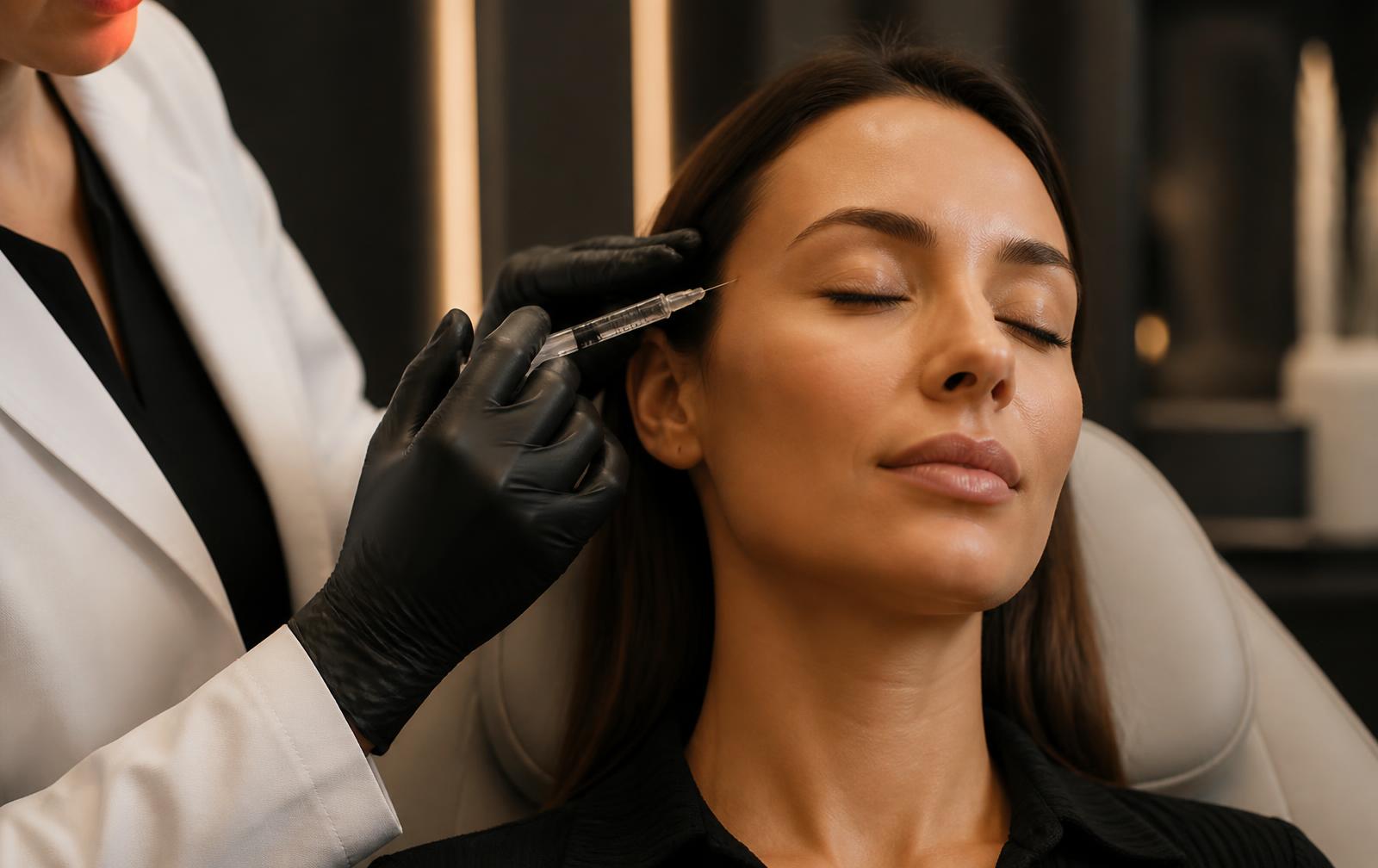
Preventative Botox has moved from Hollywood into mainstream cosmetic care over the last decade. The idea is straightforward: instead of waiting for expression lines to become permanent creases, you soften the underlying muscle activity early enough that the lines never fully form. For the right person, at the right time, in the right dose, it works. For everyone else, it can be an unnecessary expense — or worse, a treatment that flattens features that didn't need softening. Here's how to think about the decision.
Looking for the treatment itself? See our Botox in San Antonio — Medically Supervised at THEIA page for pricing guidance, protocol details and booking.
What 'preventative' actually means
All Botox is technically preventative in that it prevents muscle contraction. What we call 'preventative Botox' just refers to treating a patient before their expression lines are permanently etched into the skin at rest — the point where you see them even when your face is neutral.
In practice, that window is usually between 25 and 35, though it varies dramatically by genetics, sun exposure, and how expressive your face is at rest.
The right timing signals
A good indicator is a 'dynamic-only' line: a line visible when you frown or raise your brows, but that disappears completely when your face relaxes. That's the ideal moment for a light preventative dose — you're preventing the line from becoming static.
A poor indicator is asking about Botox because you saw a friend get it. If you don't see dynamic lines yet, the answer at your consultation should be to wait, not to treat.
Related at THEIA: Microneedling in San Antonio — Dermapen at THEIA · Radiofrequency Skin Tightening in San Antonio at THEIA.
How preventative dosing differs from corrective
Preventative treatment usually uses 20 to 40 total units across the upper face — considerably less than a corrective treatment for someone in their 40s. The goal is to soften expression, not eliminate it. A well-mapped preventative dose preserves natural movement while quieting the specific patterns creating early lines.
Because dosing is lighter, results may last slightly less than the standard 3–4 months. Most preventative patients settle into a 3-times-a-year cadence.
What to look for in a provider
The best preventative Botox providers are the ones most willing to tell you no. A physician who says 'you don't need this yet' is doing you a favor. A provider who agrees to treat every young patient who asks is prioritizing revenue over care.
Ask for photos of preventative results specifically — not corrective results on older patients. Preventative Botox should look like a well-rested version of your face, not a change in your appearance.
The alternative if you're on the fence
If you're in your late 20s and unsure, the best preventative strategy is often not Botox — it's daily SPF 50+, a retinoid, and consistent skincare. Sun damage accelerates the formation of static lines far more than expression alone. Add Botox when a specific dynamic line starts persisting after your face relaxes.
At THEIA, preventative consultations are medically directed and often result in a 'wait and reassess' recommendation. When treatment is right, dosing is deliberately light.
Questions
Frequently asked.
What's the youngest age for preventative Botox?
Botox is FDA-approved from age 18 for cosmetic use. Most physicians won't recommend it before 25 unless there's a specific dynamic line already forming.
Will preventative Botox stop me from aging?
No. It softens muscle-driven expression lines. It doesn't affect sun damage, volume loss, or skin texture — which is why sun protection and skincare remain the foundation.
Is preventative Botox more expensive over time?
Lighter doses cost less per session, but you'll pay for more sessions across your life. For most patients the lifetime cost is comparable to starting corrective treatment later.
Continue reading
More from the journal.
Begin with a consultation.
Every treatment at THEIA begins with a medical consultation and good faith examination.